With the founding of the International Olympic Committee (IOC) in 1894 and the celebration of the first modern Olympic Games , men "property in their heads and their bodies" which confront on a sports field rather than on a battlefield. Another of Concertina’s wishes is to combine sport and the arts , for which purpose he wishes to introduce art into the Olympics.
in this Olympics country giving priority to the art and Olympics 2012 tickets will be like no cost.
In May 1906 , Concertina organized in Paris a meeting between IOC members and representatives of arts organizations on the occasion of which is making the decision to hold art competitions at the Olympics. Divided into five parts (architecture, literature, music, painting and sculpture), the work to build the sport entirely.
It is first to organize these art competitions for the 1908 Olympics in Rome . However, the Italian organizers are facing financial problems and are forced to abandon the Olympics. The IOC will then designate 1907 London to host the 1908 Olympics. Lack of time leads to the abandonment of the test.
Pierre de Coubertin did not give up and insisted to include arts events in the program of Olympic Games 1912 in Stockholm . Although the Swedes were initially reluctant to the idea, they end up adopting these competitions. The number of participants is very low with only 35 artists involved, however, gold medals are awarded in five categories.
During the Summer Olympics of 1920 in Belgium ravaged by World War I , the art competition are again in the program but do not take a great importance, unlike the 1924 Olympics in Paris where competition is at the initially taken seriously with 193 candidates. Among these artists are three artists Soviet , although the Soviet Union did not take part in the Games seen as a "bourgeois festival" .
The importance of these competitions is growing at the Summer Olympics of 1928 , where more than 1100 works of art are on display at the Stedelijk Museum , not to mention the work in literature, music to architecture. Artists are allowed to sell their work at the end of the exhibition, which created a controversy because of amateurism advocated by the IOC. In addition to Amsterdam , the number of events has also increased, four of the five categories of art have changed their program for these games.
For economic reasons as well as the location of Los Angeles , participation in sports competitions at the Olympic Games in 1932 was lower than in 1928 . However, art competitions do not suffer from this problem, the participation is almost identical to that of the previous edition. The exhibition attracted 384,000 visitors to the Museum of Science, History and Art in Los Angeles. Art competitions are also present at the Berlin Games in 1936 and those in London in 1948 , with reasonable success, although the number of participants has declined considerably over the last Games.
In 1949 , a report presented at an IOC meeting in Rome said that almost all participants are professional art competitions and therefore the competition should be removed and replaced with an exhibition without price or medals. The report triggered a major debate within the International Olympic Committee. In 1951 , the IOC decided to reinstate the art competitions at the Helsinki Olympics in 1952 . However, the organizers Finnish highlight the lack of time and no exhibition or art contest will be present at these Games.
This problem continues to be debated within the IOC and in the 49 th Session of the IOC is taking to Athens , the members voted to replace competition with an exhibition for future Olympics. Various attempts at rehabilitation of these competitions were held, but without much success ..
Since then, the Olympics have ties to the art through exhibitions. The Olympic Charter states that the organizers should include a program of cultural events to promote human relations, mutual understanding and friendship among the participants at the Olympic Games.
Wednesday, 17 August 2011

Thursday, 11 August 2011
Art and Fadi karnaby Histry


For the future, he should have the recognition of peers recognized artists, and the public at large scale. But he has the soul.
The recognition of the builders, working in a field close to the creation, he is, meanwhile, gained. This profession is at the pinnacle. Especially after that as an engineer-administrator, he provided a tremendous job with the help of workers of the company Gazelle, in implementation of the structural work of architectural monument, designed by Le Corbusier: the church of Saint-Pierre in Family in the Loire. This singular character, the beautiful white mane, I would describe as having the original heart of the hand, loving to share with others: friends, family, relationships, his join the vivace, his love of people and freedom. His mind hot, crowded with new ideas, sometimes utopian, strives to make a difference in the to make life pleasant for everyone. As both bohemian and rigorous, it appeals to all who approach. patriarch, not bossy at all, but still spirited and attractive, "the ancestor "fall for her five grandchildren. Especially before the last born, Nina, 1 year, daughter of Raoul who runs for public works (he is the son of his father) in all countries of the world (currently in Johannesburg in South Africa soon Reunion, and previously, China, Japan ....) For Nina, this grandfather outsized drawing figures that do not leave us indifferent and that could expose one of these days. In this family, writing stories, knit dolls, or draw for children, denotes, in all cases, a good dose of optimism, tenderness and hope. In fact, I do have not said? Artist in the soul which I have painted the picture very quickly, my brother, Aurelio Fernandez.


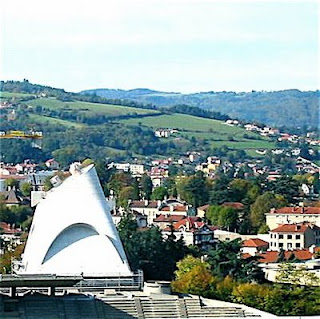
The recognition of the builders, working in a field close to the creation, he is, meanwhile, gained. This profession is at the pinnacle. Especially after that as an engineer-administrator, he provided a tremendous job with the help of workers of the company Gazelle, in implementation of the structural work of architectural monument, designed by Le Corbusier: the church of Saint-Pierre in Family in the Loire. This singular character, the beautiful white mane, I would describe as having the original heart of the hand, loving to share with others: friends, family, relationships, his join the vivace, his love of people and freedom. His mind hot, crowded with new ideas, sometimes utopian, strives to make a difference in the to make life pleasant for everyone. As both bohemian and rigorous, it appeals to all who approach. patriarch, not bossy at all, but still spirited and attractive, "the ancestor "fall for her five grandchildren. Especially before the last born, Nina, 1 year, daughter of Raoul who runs for public works (he is the son of his father) in all countries of the world (currently in Johannesburg in South Africa soon Reunion, and previously, China, Japan ....) For Nina, this grandfather outsized drawing figures that do not leave us indifferent and that could expose one of these days. In this family, writing stories, knit dolls, or draw for children, denotes, in all cases, a good dose of optimism, tenderness and hope. In fact, I do have not said? Artist in the soul which I have painted the picture very quickly, my brother, Aurelio Fernandez.


Monday, 1 August 2011
Abstract art, an invention of the 20th century
During the second decade of the twentieth century, a radical and decisive occurs in painting, the invention of abstraction.
Of course, since the dawn of time, non-figurative forms were used in decorative programs, such as decorating the Greek terracottas of antiquity, the baroque arabesques of wrought iron or curls of Art Nouveau. But these motives were subject to external purposes, such as the beautification of a place or object.
The approach that characterizes the masters of abstraction of the early 20th century is to propose, simply, an "image abstract. "
The oxymoron is that this phrase, an image is traditionally defined as a replica of reality, says the new company. The abstract paintings are images that refer to self nothing else but themselves. In this sense they are similar to the icons of the Orthodox faith who demonstrate the presence of content rather than they are, but, unlike these religious images, abstract paintings break with the world of appearances. They reveal the existence of previously unseen and unknown realities, as determined by each artist in his own way, in his own convictions, their background and culture, folk art to the most speculative theories. Each of the four pioneer artists of abstraction, Frantisek Kupka , Wassily Kandinsky , Kasimir Malevich and Piet Mondrian , resulting in his own language of abstraction, independently of the others.
However, they crossed the threshold of abstraction about at the same time, between 1911 and 1917, simultaneity can be explained by common concerns. They all had a spiritual practice or esoteric. They were also, for some, very attached to music, the least imitative of all arts, they have sometimes taken as a model. And, more generally, they worked in a cultural context, especially with the emergence of science of quantum physics and relativity theory, where the notion of reality becomes problematic. As noted by Paul Valéry at the time, "Neither the matter nor space nor time is twenty years since they were always". In this context culture and science of the early 20th century, the reality is less than what we perceive with the senses that an entity that is approached by thought experiments.
The inventors of abstraction propose a new form of painting in line with this worldview.
Of course, since the dawn of time, non-figurative forms were used in decorative programs, such as decorating the Greek terracottas of antiquity, the baroque arabesques of wrought iron or curls of Art Nouveau. But these motives were subject to external purposes, such as the beautification of a place or object.
The approach that characterizes the masters of abstraction of the early 20th century is to propose, simply, an "image abstract. "
The oxymoron is that this phrase, an image is traditionally defined as a replica of reality, says the new company. The abstract paintings are images that refer to self nothing else but themselves. In this sense they are similar to the icons of the Orthodox faith who demonstrate the presence of content rather than they are, but, unlike these religious images, abstract paintings break with the world of appearances. They reveal the existence of previously unseen and unknown realities, as determined by each artist in his own way, in his own convictions, their background and culture, folk art to the most speculative theories. Each of the four pioneer artists of abstraction, Frantisek Kupka , Wassily Kandinsky , Kasimir Malevich and Piet Mondrian , resulting in his own language of abstraction, independently of the others.
However, they crossed the threshold of abstraction about at the same time, between 1911 and 1917, simultaneity can be explained by common concerns. They all had a spiritual practice or esoteric. They were also, for some, very attached to music, the least imitative of all arts, they have sometimes taken as a model. And, more generally, they worked in a cultural context, especially with the emergence of science of quantum physics and relativity theory, where the notion of reality becomes problematic. As noted by Paul Valéry at the time, "Neither the matter nor space nor time is twenty years since they were always". In this context culture and science of the early 20th century, the reality is less than what we perceive with the senses that an entity that is approached by thought experiments.
The inventors of abstraction propose a new form of painting in line with this worldview.
Friday, 29 July 2011
Art- Fadi Karnaby
the artist is a learned, experienced valuation of the end of the period the church of the Middle Ages retrieves Greek motifs symbolic themes for Christians. Atlas is used to include God, the pattern remains the same but its meaning changes.
It is for the greater glory of God that the artists work, and nothing is too good to celebrate it. The colors explode in the pages of manuscripts (the admirable Apocalypse of Saint-Sever), on windows, or tissue, which often come from Byzantium or the Islamic world. The capitals and statues are painted. Gold, ivory and precious stones adorn the reliquaries, sacred vessels or the bindings of the Gospels.
"Do not look in the Romanesque style unit said Danielle Gaborit-Chopin. Each artist seems to find a new expression. Each offers different solutions, which can lead to a masterpiece as a dead end. "
Is it possible to distinguish "local schools" "It would be pointless to release any strength of regional styles, since, within the same geographical area, different styles co-exist, says Ms Gaborit. There individualization of regional centers, but we can not really talk about regional schools. "It is certain, however, that this emerging company, being completely remodeled, broke with the previous period, that of the Carolingians, obsessed with maintaining their links with the late Roman Empire.
REFINED AND ALMOST BARBARIAN
Artists novels - which are far from being anonymous as is the tradition - yet have some common features. They ignore the reality and remain indifferent to the proportions. The size of the characters (or parts of the body such as hands) is a reflection of their symbolic importance. Because they do not try to translate the tangible reality and ignore the abstraction, the artists draw their inspiration from natural forms which they interpret, purify, to coincide with their feelings of religious mystery. In addition, they work freely from elements "reported", Byzantine, Islamic and ancient, sometimes pushing up the art of collage, combining all the findings, without complex, with strong momentum.
It appears from the Louvre with the idea of an art at once refined and almost barbarous. Some parts, such as reliquaries who complete the course of the show, reminiscent of "idols" of Africa. We find the same rejection of realism, the same symbolism, the same hieratic, the same salience of the sacred. In the Romanesque period, Georges Duby wrote in The Age of Cathedrals (Gallimard), art has "no other function than to offer to God the riches of the visible world, that allow the man to such gifts to appease the wrath of the Almighty and to win his favor. All great art was then sacrifice. It is less aesthetic than the magic. " And he adds: "How Christianity, one thousand, prostrate in front of shrines, have dared to focus on what Christ was human? "
Finally, the Romanesque, says the historian, is a way of initiation. It is responsible for translating into simple shapes the harmonic structure of the world. It is a revealing: "Art is a discourse on God, as the liturgy and music. "That's why it proceeds by symbols. That the objects are monument, painting or piece of jewelry, carved or painted, all "present the world a gloss, a clarification." Their forms were not addressed to the crowds, insists Duby, but close elite. If the novel sometimes plays art pedagogy, "for education remained marginal in the artistic creations of that time: it is an aesthetic closed, inward-looking, made for the" pure men ". "
Ms. Gaborit unique challenges this bias. "While it is true that at that time, the art comes out of the whole Church, which is the only force grown, large ears of the religious buildings are real lessons given to the faithful. The lives of saints painted on the walls of shrines play the same role. There is a real education. Furthermore, reliquaries were out in processions, for the holidays, they run the emulation of the faithful. It is certain, however, that there are two levels of reading in Roman art: immediate access to the largest number, and a hidden message which is addressed to the elite. But this need to reach the faithful is more noticeable than the Gothic period, when art will emanate from the royal court. "
Emmanuel de Roux: Article published in World of 3/17/05 on "Romanesque art, or the flowering of a new world," March-June 2005 Louvre Museum
French art in the Gothic (Ernest Renan)
"The Gothic style thus appears as a purely French art. He was born with France, at the very center of French nationality in this country prosperous and rich that emerged the first Germanic fertility, was the cradle of the Capetian dynasty, and collected before any other benefits. It was, as stated by M. Viollet-le-Duc, the architecture of the royal domain. Mainly under the influence of French royalty and the Abbey of Saint-Denis, this country, in the eleventh and twelfth centuries was the scene of a great awakening of the human spirit, a kind of rebirth, which resulted in poetry by the epics, philosophy, the emergence of scholasticism, in politics by the movement of Commons and the administration of Suger in Saint Bernard and religion by the crusades. Gothic architecture, or rather, the movement of construction when it came out was the product of the same causes. As for municipalities, it was probably not a fortuitous circumstance that made their school to coincide with the architectural renovation. The church at that time, had inherited the forum and basilica old, was the venue of the meetings calendar, and, indeed, they are common to towns, Noyon, Laon, Soissons, raising the first cathedrals Gothic.
That nothing, neither Italian nor German, not to meddle in this first revival all French of the eleventh and twelfth centuries, so sadly stopped in the fourteenth, which is, for architecture, is a certainty. Hundred years at least the pointed style remains the exclusive property of France. The Rhine is still covered in Romanesque buildings, when the masterpieces of the Gothic style were already high in northern France. England was the Gothic churches built in the twelfth century, but by the French. In 1174, the rebuilding of Canterbury Cathedral has been decided, they opened a competition: it was William of Sens, famous for great work, which was chosen, and the choir began in the new system that already existed exclusively in France . In the thirteenth century, countless master masons who wore this style to the borders of Latin Europe were French. The first non-French Gothic architect whose name is known is Erwin of Steinbach (1277). In Germany, until the fourteenth century, this style is called "French style", Op francigenum, and that's the name he should have kept. Unfortunately fate which deprived France of the glory of his epics can be found here. The narrow mind which dominates from St. Louis, the violence of the Inquisition, the miseries of the Hundred Years War, put out in our engineering. Strasbourg and Cologne schools become the style that we had created. France sees in turn to her foreign artists. The French style is said to German Italy called Teutonic, then, by a misunderstanding of the most bizarre claim is absurd to designate the name of Gothic. Remember that the barbarians were mainly known in Italy by the Goths. Gotico became synonymous with Barbaro, and a legend represented the Goths as fantastic beings bent on the destruction of Roman monuments, they were hammered overnight. In their disdain for this architecture, which did not conform to Greek orders, and was deeply repugnant to them, the Italians of the sixteenth century called it gotica, and this name was more easily accepted by the seventeenth-century France , the word Gothic was taken into French, as a result of Italian influence, like a shade (Gothic script, the Gothic period, etc.).. From there to say that the Goths had invented this style, there was only one step: the Vasari crosses, and now this nonsense is not yet uprooted history of Italy.
How extraordinary that style was formed, which, for nearly four hundred years covered Latin Europe building footprints so deep originality? The learned and judicious research that I remembered just now solved the issue. The old assumptions, and an Eastern influence, and a Germanic origin, and a so-called type Xyloid (wooden architecture) must be totally abandoned. The Gothic style emerged from a novel by natural growth, or if we prefer, by the work of men of genius firing an inflexible logic consequences of the art of their time: it was the continuation of an earlier style, founded around 1000 and deducted himself of the laws that previously had chaired in the West for the construction of Christian temples. "
By- Fadi Karnaby
Tuesday, 26 July 2011
The art and spiritual life- Fadi karnaby
"Art is the organization of sensory impressions, which expresses the sensitivity of the artist and communicates to its audience a sense of values that can change their lives" . Using its own definition, Sangharakshita explores the relevance of art and the artist for personal and spiritual evolution of man.

The Buddha by Odilon Redon
by- Fadi Karnaby

The Buddha by Odilon Redon
Through art we mean all the arts. We take this term to cover painting, sculpture, poetry, music, architecture, etc.. And the spiritual life we mean the whole process of higher evolution. In this regard, I must admit that I am not very happy with the word 'spiritual'. When I was writing down the track list for these readings, I really hesitated before writing the word and spirit of art and spiritual life, because I know that for many people the word spiritual has a bad connotation. When we speak of spiritual life people begin to believe in spirits and spiritualism and turntables and voices from beyond and shapes and appearances. So I could not help but think it is better to avoid the word spiritual. Unfortunately, there is no one in everyday language equivalent term for the word spiritual. I thought perhaps we could begin to popularize the term 'meta-biological' I had already used. I know it's a bit long, meta-biological, but the month has the merit of covering all the higher manifestations of the human spirit, not only art but also religion and philosophy.
So when we talk about art and spiritual life, or art and higher evolution, we are not suggesting that these are really two separate things. Not that you have art on one side and the spiritual life of another. The art here and the spiritual life there, rather superficially united by that little word "and". Not that art and religion are in a superficial relationship. We can even say that art is included in the spiritual life, the arts are just one aspect or manifestation of the higher evolution as such. It does not mean, of course you can not live a spiritual life, can not participate in the higher evolution of humanity, without being an artist. It does not mean it, but it means we can not be an artist without participating in the same time to the spiritual life, the evolution later. To the extent that is an artist, a true artist, a genuine artist of any discipline, is involved in the higher evolution of man.
Now I'm sure this idea is not obvious to most people. They could see it as an unnecessary glorification of the artist, and even they may not agree at all. We know that people generally have little regard for art and the artist. In truth they do not see too much, not compared with other more important things, other activities that really matter. Many people have a tendency to have a contemptuous gaze on the arts and the artist and think that the artist deals with things rather trivial, not the "real man's job". In this context, I remember a little story, I think of the autobiography of Sir Osbert Sitwell, who is a long work in several volumes, very prolific, but contains some very good stories well told. Perhaps you know that Sitwell was one of those very, very bright family where almost everyone seems to be a genius and all your brothers, sisters, aunts, cousins, uncles etc.. are geniuses - it must be a wonderful way to grow. So you Osbert and Sacheverell and the famous Edith, all currently living together when they were young in this huge old dilapidated family home, one lives in a wing, the other in another wing, with one kilometer of corridors them with many servants. Then, as reported by Osbert Sitwell, one morning he wanted to communicate with her sister Edith in her wing to her. So it sounds to call a maid and gives her a little note, saying: Give the paper to my sister if she is not busy. But if she does something, do not give, do not disturb. Just come right back and tell me: when a quarter of an hour later, after crossing all lanes in both directions, the maid comes. Sir Osbert and ask him you gave him the message? "She said, oh yes. My sister was not doing anything? Oh no, she did nothing at all, she was just writing. So it 's is often the attitude when you are writing or painting, or if you do something of this sort, you do nothing really.
In light of this sort of common misconception on the theme of arts in general, so try to go a little deeper into this whole subject, and try to see how or in what sense the art is part of spiritual life, the higher evolution of man. And also how the artist is, in fact, the new man? Now it will require a consideration of the question of what is art? But we put it aside for now and we will observe the artist as a new man, the artist regarded as sharing the characteristics of the new man.
The new man is distinguished by five characteristics. Surely there are many more, but apparently they are more clearly recognizable. The characteristics are the awareness of self, true individuality, creativity, loneliness and unpopularity common. So take a break before returning to the question of what is art and look briefly at how we can apply the five characteristics of the new man to the artist, he is a poet, painter, sculptor or musician etc.by- Fadi Karnaby
Monday, 25 July 2011
Why art? - Fadi Karnaby
This file is part of a series A movement, a period which will be regularly increased in this part of the site.
- These files are made around a selection of works of the main movements and tendencies represented in the collections of National Museum modern art.
- primarily aimed at teachers or group leaders, they are intended to provide benchmarks and a basis for work to facilitate the approach and understanding of the establishment in 20 th century, or to prepare a visit to the Museum *. Each of these files include: - an overview to define and situate the movement in a historical, geographical and aesthetic - a selection of works from the Museum's collections the most representative, addressed by cards with instructions for work, a reproduction and a biography of the artist - one or more reference texts in addition to providing a theoretical approach - a chronology - a selective bibliography. NOTE * The museum's collections include 65 000 works. The Museum regularly varies the works presented in spaces on the fourth and fifth levels of the Centre Pompidou. The lesson plans are made in connection with the clashes. For more information on the collections of the Museum:
By
Fadi karnaby
- These files are made around a selection of works of the main movements and tendencies represented in the collections of National Museum modern art.
- primarily aimed at teachers or group leaders, they are intended to provide benchmarks and a basis for work to facilitate the approach and understanding of the establishment in 20 th century, or to prepare a visit to the Museum *. Each of these files include: - an overview to define and situate the movement in a historical, geographical and aesthetic - a selection of works from the Museum's collections the most representative, addressed by cards with instructions for work, a reproduction and a biography of the artist - one or more reference texts in addition to providing a theoretical approach - a chronology - a selective bibliography. NOTE * The museum's collections include 65 000 works. The Museum regularly varies the works presented in spaces on the fourth and fifth levels of the Centre Pompidou. The lesson plans are made in connection with the clashes. For more information on the collections of the Museum:
By
Fadi karnaby
Friday, 22 July 2011
Desperate act of a collector-Fadi Karnaby
Desperate act of a collector who feels the wind change and does not know what artist invest, or exciting new publicity stunt? Charles Saatchi does not speak. In twenty years, he has granted interviews to the press are extremely rare and asthenic. And it seems to encourage merchants, artists, galleries, museums, to stay as discreet as possible. Apart from art critics, very few are willing to talk about the man. Christie's, the deputy director of the department of contemporary art, Pilar Ordovas, prefers to talk the market in general rather than to Saatchi in particular. Same reluctance at the Tate Modern, or in London gallery: the director of White Cube, Jay Jopling, we stated that it " does not wish to speak on the subject. " Yet the two men were close associates for more than twenty years.
Fadi Karnaby Says
The story of Charles Saatchi is a novel. Born into a Jewish family in Baghdad in 1943, his parents emigrated to Britain four years later and settled on the heights of Hampstead area of the intelligentsia refined and Easy London. As a teenager, this admirer of Elvis Presley collecting comics and jukeboxes. In 1970, the London psychedelic, he founded with his brother Maurice their company, Saatchi & Saatchi. In ten years, she became one of advertising's most famous in the world. In the late 70's, they have six hundred offices worldwide.
In 1973, during a stay in Paris with his first wife, the American art critic Doris Lockhart, he bought his first work, realistic painting and signed by the Columbia Urban David Hepher. However, his job leaves him little time to run the gallery. Five years later, the Conservative party contacts the Saatchi brothers for the election of Margaret Thatcher. A vivid image, an endless line of unemployed people under the slogan "Labour does not work." The British do not re-elect the Labor government of the time. However, this long line of unemployed people has never existed. Saatchi photographed a couple of young conservative supporters, and the images superimposed to create the impression of a huge file ...
Disappointed that he helped bring to power, Charles is involved in contemporary art and opened his first gallery in 1985, a large warehouse in North London, between St. John's Wood and Swiss Cottage. There he discovered artists like Jeff Koons, Richard Serra, Bruce Nauman and the famous YBAs, the Young British Artists of which he has won most of the works they leave college. It shows for the first time sliced shark preserved in formaldehyde by Damien Hirst and a molded frozen head by sculptor Marc Quinn, made of eight liters of his own blood and kept in a cooler transparent. Saatchi bought 13,000 pounds in 1991, he sold it 1.5 million pounds in 2005.
His gallery is too small to display all the artists large. He convinced the venerable Royal Academy to mount a coup. We are in 1997, the exhibition called "Sensation." Protesters camped in the courtyard of the museum for days. Ignite the tabloids. The Daily Mail as: "For over a thousand years, art is one of our great strengths. Today, sheep formalin threaten to make us barbarians. " The visitor discovers the artist Tracey Emin and his tent titled Everyone I Have Ever Slept with 1963-1995, in which his nude photo next to the names embroidered on the canvas, all her lovers and the two babies she aborted. Chris Ofili and the Black Madonna, portrait of a woman sprinkled with dried elephant dung, is also about him. Not to mention the Chapman brothers and mannequins of children with eyes, mouths, noses and ears have been replaced by rectum and penis. "Sensation" been around the world. The reputation of the Young British Artists is made, the fortunes of Saatchi too.
-By Fadi karnaby
Fadi Karnaby Says
The story of Charles Saatchi is a novel. Born into a Jewish family in Baghdad in 1943, his parents emigrated to Britain four years later and settled on the heights of Hampstead area of the intelligentsia refined and Easy London. As a teenager, this admirer of Elvis Presley collecting comics and jukeboxes. In 1970, the London psychedelic, he founded with his brother Maurice their company, Saatchi & Saatchi. In ten years, she became one of advertising's most famous in the world. In the late 70's, they have six hundred offices worldwide.
In 1973, during a stay in Paris with his first wife, the American art critic Doris Lockhart, he bought his first work, realistic painting and signed by the Columbia Urban David Hepher. However, his job leaves him little time to run the gallery. Five years later, the Conservative party contacts the Saatchi brothers for the election of Margaret Thatcher. A vivid image, an endless line of unemployed people under the slogan "Labour does not work." The British do not re-elect the Labor government of the time. However, this long line of unemployed people has never existed. Saatchi photographed a couple of young conservative supporters, and the images superimposed to create the impression of a huge file ...
Disappointed that he helped bring to power, Charles is involved in contemporary art and opened his first gallery in 1985, a large warehouse in North London, between St. John's Wood and Swiss Cottage. There he discovered artists like Jeff Koons, Richard Serra, Bruce Nauman and the famous YBAs, the Young British Artists of which he has won most of the works they leave college. It shows for the first time sliced shark preserved in formaldehyde by Damien Hirst and a molded frozen head by sculptor Marc Quinn, made of eight liters of his own blood and kept in a cooler transparent. Saatchi bought 13,000 pounds in 1991, he sold it 1.5 million pounds in 2005.
His gallery is too small to display all the artists large. He convinced the venerable Royal Academy to mount a coup. We are in 1997, the exhibition called "Sensation." Protesters camped in the courtyard of the museum for days. Ignite the tabloids. The Daily Mail as: "For over a thousand years, art is one of our great strengths. Today, sheep formalin threaten to make us barbarians. " The visitor discovers the artist Tracey Emin and his tent titled Everyone I Have Ever Slept with 1963-1995, in which his nude photo next to the names embroidered on the canvas, all her lovers and the two babies she aborted. Chris Ofili and the Black Madonna, portrait of a woman sprinkled with dried elephant dung, is also about him. Not to mention the Chapman brothers and mannequins of children with eyes, mouths, noses and ears have been replaced by rectum and penis. "Sensation" been around the world. The reputation of the Young British Artists is made, the fortunes of Saatchi too.
-By Fadi karnaby
Subscribe to:
Posts (Atom)