At the Fruit Market in the center of Valeggio, a classic Art Deco style building in 1938 abandoned for years, on display, before it is restored or dismantled, from September 23 to October 16 next, in the meantime / Meanwhile, by Lucio Pozzi, artist of the original group of PS1, New York school, which in 1975 became the first alternative art space.
The peeling walls, the remnants of plaster and decor of the long history of the property, enter into dialogue with the works of some artists, very different, scattered into the large room.
Instead of a common theme, will connect them to the void that surrounds them and the indefinable difference that distinguishes them.
Giacinto Cerone participate, Arthur Duff, Bruna Esposito, Sara Faccin, Andrew Sheets, Raffaella Formenti, Armida Gandini, Jeff Hendricks, James Hyde, Alison Knowles, David Lindberg, Emil Lukas, Hector Mamet, Philip Manzini, Paolo Masi, Albano Morandi, Giovanni Morbin, Lucia Pescador, Giordano Pozzi Luca Pozzi, Lucio Pozzi, Roberto Pugliese, Giovanni Rizzoli, Fabio Sandri, Lorenza Sannai, Nida Simaokrot, Fulvio Testa, Blair Thurman.
In modern times, people seem to bring himself to associate art works in their definitions, programs or statements prepared in order to distinguish it from the past, even recently, is the mass of arts events around us. Less art performs functions established and more it seems to squirm in order to legitimize their own events in packages that limit.
Often, the excuse used are the formulas of the novelty or originality, or the artist felt compelled to decipher the reasons for the viewer of his work, what he believes to be its subject or content. Some rare times, the enunciation of the ulterior motives underlying the work is really necessary to increase the enjoyment, but often it is not 'that limit the creative contribution of the spectator, the artist and or channeling the agenda of the interpreter.
Lucio Pozzi believes that art is finally freed from the addiction which had been subjugated for centuries. His new freedom frightens many. In a panic to find themselves with no hooks on which there is mutual agreement, many people do invent constraints that echo the ancient lost consensus. Even the drive to get rid of old conformism, in the vanguard of the twentieth century and its followers today, is found mummified in parasitic formulas.
This shows the curator tries to avoid the pitfalls of 'explanation' acute infection, the virus that suppresses the modern art. Try to enable the highest degree and with modesty 'and there being a' work.
The various perspectives presented here are woven and memories in the immense variety of materials, processes and ideas that each author or the author chooses as the field in which to exercise his imagination and his intellect.
Lucio Pozzi want the sense of the exhibition proves, even to himself, only after it has been built.
The artist of our time in perennial and intermittent oscillation is only. It is not lonely, because it interacts with others who feel sympathy for the intellectual, but it is only because only handles its own decisions without reference sure, shared by the community. Even those who look or listen to it alone, bewildered by the multiplicity of horizons that is in art. Lucio Pozzi This is a big step forward in the global artistic consciousness. You can not lose sight of the various contexts within which the discourse of art is, but the loneliness of people who engage in it, makes it alive, like never before, the individual creativity of all who are interested in art.
"When I look, I follow a simple principle: if after all the factors enumerated in a work that I recognize nothing remains that escapes me completely, then I lose interest," said the curator, in the selection of works to be exhibited has decided to rely to subjective intuition, focused on this place and this gathering of works. "I entrust myself to feel affinity with the art of artists I've seen around and they have piqued my attention, even with the art of friends, relatives and acquaintances, some of which I included because I feel the importance in this specific context. There is also my work, "he says.
The title implies the presence Meanwhile, between a before and an after. The Fruit Market of obsolete Valeggio is full of layers. Placed in a place like this, works of art are on the one hand incontrovertible being where they are located, on the other hand changes. Wherever they are, but their addition changes the environment, it also absorbs the place of its forms, lights, shadows and history.
Meanwhile indicates transience. Not all the works presented here were made specifically for this site, some were born years ago, but put in this context suggests that the transition to longer term. Beneath all the noise that grows around the controversial contemporary art, beyond the arbitrary and competitive certainty about the quality of this or that form of art, Lucio Pozzi and melancholic feel an exhilarating sense of insecurity in our artistic culture: hilarious, because the oriented towards a permanent warning to exercise caution in a way that can not take anything for granted, because it opposes the permanent melancholy confirmation of the innate frailty of life, hope of eternal life.
This building is so steeped in history and art that it is now temporarily placed, are entities in transition.
"A well-articulated attracts me the most precarious of final solutions increasingly sought after by modern and always intended either to collapse or fossilized. I am fascinated by the symbiosis between art work and place of exposure, that it is the white cube or a local retired. I fascinated by this as I am seduced by the symbiosis between the person who made it and the viewer. Between the two formed a contract, an unbearable tension which comes from the intensity of the exchange, the gaze inevitably related to the time. Although rooted in lattice of its history and its terms of reference, the work falls more then that in all the cages in which both artist and the viewer then try to fence. The works presented here arise from extremely varied personal and social narratives I feel that here is not my job to decipher, so as not to lock to start an open dialogue. They contain different levels of accessibility and it will be interesting to hear the buzz of the comments they involve contradictory. In certain of these themes will recognize the most obvious, in others the issues are hidden. Some visitors will feel disappointed, while other stimuli to their deep feelings and thoughts. There are constructions and projections, and even sounds. Even the paint is applied by hand on flat surface and rectangular, eternal and often controversial basis for comparison of 'modern art, is here presented in two forms one of the most abused, the geometry and the landscape, just because you feel rediscovered as fertile fields of fresh creativity after their apparent exhaustion "Lucio Pozzi.
Wednesday, 14 September 2011

Thursday, 1 September 2011
The art game or is it work
* Art : 1) In old, know-how, human, any practice producing a result unnatural (artificial). 2) In the modern sense of aesthetics, production or creation of works intended to please (Fine Art), that is to say, to lead in appearance, a positive aesthetic appreciation.
* Work : From the popular Latin tripalium "machine three piles" designed to stop the horses for shoeing, which "instrument of torture." Any activity aimed at producing a useful work. Specifically, all activities performed by humans to produce goods and services in return for which he is paid. * The work is often associated with pain and suffering. Elsewhere in the Bible, God punishes sin by driving the first Adam from the Garden of Eden and now forcing him to cultivate a barren land, "You earn your bread by the sweat of your brow." * For Marx, human labor is helping to transform as well as human nature. Contrary to the animal, acting out of pure instinct, the man determines his consciousness in order to achieve it before you realize it. "What distinguishes early on the worst architect from the bee the most expert, wrote Marx, is that he built the cell in his head before building the hive. '* The wage labor is, according to Nietzsche, "the best policy", "It takes everyone in check and powerful means to hinder the development of reason, desire, taste of independence."
The art requires training, discipline, technique , concentration. It reports to work instead of play Art is serious work. But artistic creation is a free activity, disinterested e, whose purpose fun and entertainment .
The artist provides a real job, because the artistic application of effort and considerable technical skill.
The art requires a technique
Like any work of art requires technical know-how. The most obvious similarity between the artist and the technician is manual labor of the material. Focillon in this regard speaks of the "tactile values" of art: "Art is done by hand. (...) In Roman iconography, God does not blow on the globe of the world to launch in the ether. He puts it up in there with the hand. And it's a great hand Rodin (1840-1917), to include the work of six days, brings out a block where the dormant forces of chaos "(life forms). Similarly, the hand reveals itself technician intelligence of man.
* i) Art is a work rather than a game
a) The art requires a technique.
b) The art takes effort.
c) Art is serious.
* ii) The art is a game rather than work.
a) Art is not utilitarian.
b) The art is free.
c) The artist plays with the forms
* Work : From the popular Latin tripalium "machine three piles" designed to stop the horses for shoeing, which "instrument of torture." Any activity aimed at producing a useful work. Specifically, all activities performed by humans to produce goods and services in return for which he is paid. * The work is often associated with pain and suffering. Elsewhere in the Bible, God punishes sin by driving the first Adam from the Garden of Eden and now forcing him to cultivate a barren land, "You earn your bread by the sweat of your brow." * For Marx, human labor is helping to transform as well as human nature. Contrary to the animal, acting out of pure instinct, the man determines his consciousness in order to achieve it before you realize it. "What distinguishes early on the worst architect from the bee the most expert, wrote Marx, is that he built the cell in his head before building the hive. '* The wage labor is, according to Nietzsche, "the best policy", "It takes everyone in check and powerful means to hinder the development of reason, desire, taste of independence."
The art requires training, discipline, technique , concentration. It reports to work instead of play Art is serious work. But artistic creation is a free activity, disinterested e, whose purpose fun and entertainment .
The artist provides a real job, because the artistic application of effort and considerable technical skill.
The art requires a technique
Like any work of art requires technical know-how. The most obvious similarity between the artist and the technician is manual labor of the material. Focillon in this regard speaks of the "tactile values" of art: "Art is done by hand. (...) In Roman iconography, God does not blow on the globe of the world to launch in the ether. He puts it up in there with the hand. And it's a great hand Rodin (1840-1917), to include the work of six days, brings out a block where the dormant forces of chaos "(life forms). Similarly, the hand reveals itself technician intelligence of man.
* i) Art is a work rather than a game
a) The art requires a technique.
b) The art takes effort.
c) Art is serious.
* ii) The art is a game rather than work.
a) Art is not utilitarian.
b) The art is free.
c) The artist plays with the forms
Wednesday, 17 August 2011
Art and Olympics
With the founding of the International Olympic Committee (IOC) in 1894 and the celebration of the first modern Olympic Games , men "property in their heads and their bodies" which confront on a sports field rather than on a battlefield. Another of Concertina’s wishes is to combine sport and the arts , for which purpose he wishes to introduce art into the Olympics.
in this Olympics country giving priority to the art and Olympics 2012 tickets will be like no cost.
In May 1906 , Concertina organized in Paris a meeting between IOC members and representatives of arts organizations on the occasion of which is making the decision to hold art competitions at the Olympics. Divided into five parts (architecture, literature, music, painting and sculpture), the work to build the sport entirely.
It is first to organize these art competitions for the 1908 Olympics in Rome . However, the Italian organizers are facing financial problems and are forced to abandon the Olympics. The IOC will then designate 1907 London to host the 1908 Olympics. Lack of time leads to the abandonment of the test.
Pierre de Coubertin did not give up and insisted to include arts events in the program of Olympic Games 1912 in Stockholm . Although the Swedes were initially reluctant to the idea, they end up adopting these competitions. The number of participants is very low with only 35 artists involved, however, gold medals are awarded in five categories.
During the Summer Olympics of 1920 in Belgium ravaged by World War I , the art competition are again in the program but do not take a great importance, unlike the 1924 Olympics in Paris where competition is at the initially taken seriously with 193 candidates. Among these artists are three artists Soviet , although the Soviet Union did not take part in the Games seen as a "bourgeois festival" .
The importance of these competitions is growing at the Summer Olympics of 1928 , where more than 1100 works of art are on display at the Stedelijk Museum , not to mention the work in literature, music to architecture. Artists are allowed to sell their work at the end of the exhibition, which created a controversy because of amateurism advocated by the IOC. In addition to Amsterdam , the number of events has also increased, four of the five categories of art have changed their program for these games.
For economic reasons as well as the location of Los Angeles , participation in sports competitions at the Olympic Games in 1932 was lower than in 1928 . However, art competitions do not suffer from this problem, the participation is almost identical to that of the previous edition. The exhibition attracted 384,000 visitors to the Museum of Science, History and Art in Los Angeles. Art competitions are also present at the Berlin Games in 1936 and those in London in 1948 , with reasonable success, although the number of participants has declined considerably over the last Games.
In 1949 , a report presented at an IOC meeting in Rome said that almost all participants are professional art competitions and therefore the competition should be removed and replaced with an exhibition without price or medals. The report triggered a major debate within the International Olympic Committee. In 1951 , the IOC decided to reinstate the art competitions at the Helsinki Olympics in 1952 . However, the organizers Finnish highlight the lack of time and no exhibition or art contest will be present at these Games.
This problem continues to be debated within the IOC and in the 49 th Session of the IOC is taking to Athens , the members voted to replace competition with an exhibition for future Olympics. Various attempts at rehabilitation of these competitions were held, but without much success ..
Since then, the Olympics have ties to the art through exhibitions. The Olympic Charter states that the organizers should include a program of cultural events to promote human relations, mutual understanding and friendship among the participants at the Olympic Games.
in this Olympics country giving priority to the art and Olympics 2012 tickets will be like no cost.
In May 1906 , Concertina organized in Paris a meeting between IOC members and representatives of arts organizations on the occasion of which is making the decision to hold art competitions at the Olympics. Divided into five parts (architecture, literature, music, painting and sculpture), the work to build the sport entirely.
It is first to organize these art competitions for the 1908 Olympics in Rome . However, the Italian organizers are facing financial problems and are forced to abandon the Olympics. The IOC will then designate 1907 London to host the 1908 Olympics. Lack of time leads to the abandonment of the test.
Pierre de Coubertin did not give up and insisted to include arts events in the program of Olympic Games 1912 in Stockholm . Although the Swedes were initially reluctant to the idea, they end up adopting these competitions. The number of participants is very low with only 35 artists involved, however, gold medals are awarded in five categories.
During the Summer Olympics of 1920 in Belgium ravaged by World War I , the art competition are again in the program but do not take a great importance, unlike the 1924 Olympics in Paris where competition is at the initially taken seriously with 193 candidates. Among these artists are three artists Soviet , although the Soviet Union did not take part in the Games seen as a "bourgeois festival" .
The importance of these competitions is growing at the Summer Olympics of 1928 , where more than 1100 works of art are on display at the Stedelijk Museum , not to mention the work in literature, music to architecture. Artists are allowed to sell their work at the end of the exhibition, which created a controversy because of amateurism advocated by the IOC. In addition to Amsterdam , the number of events has also increased, four of the five categories of art have changed their program for these games.
For economic reasons as well as the location of Los Angeles , participation in sports competitions at the Olympic Games in 1932 was lower than in 1928 . However, art competitions do not suffer from this problem, the participation is almost identical to that of the previous edition. The exhibition attracted 384,000 visitors to the Museum of Science, History and Art in Los Angeles. Art competitions are also present at the Berlin Games in 1936 and those in London in 1948 , with reasonable success, although the number of participants has declined considerably over the last Games.
In 1949 , a report presented at an IOC meeting in Rome said that almost all participants are professional art competitions and therefore the competition should be removed and replaced with an exhibition without price or medals. The report triggered a major debate within the International Olympic Committee. In 1951 , the IOC decided to reinstate the art competitions at the Helsinki Olympics in 1952 . However, the organizers Finnish highlight the lack of time and no exhibition or art contest will be present at these Games.
This problem continues to be debated within the IOC and in the 49 th Session of the IOC is taking to Athens , the members voted to replace competition with an exhibition for future Olympics. Various attempts at rehabilitation of these competitions were held, but without much success ..
Since then, the Olympics have ties to the art through exhibitions. The Olympic Charter states that the organizers should include a program of cultural events to promote human relations, mutual understanding and friendship among the participants at the Olympic Games.
Thursday, 11 August 2011
Art and Fadi karnaby Histry


For the future, he should have the recognition of peers recognized artists, and the public at large scale. But he has the soul.
The recognition of the builders, working in a field close to the creation, he is, meanwhile, gained. This profession is at the pinnacle. Especially after that as an engineer-administrator, he provided a tremendous job with the help of workers of the company Gazelle, in implementation of the structural work of architectural monument, designed by Le Corbusier: the church of Saint-Pierre in Family in the Loire. This singular character, the beautiful white mane, I would describe as having the original heart of the hand, loving to share with others: friends, family, relationships, his join the vivace, his love of people and freedom. His mind hot, crowded with new ideas, sometimes utopian, strives to make a difference in the to make life pleasant for everyone. As both bohemian and rigorous, it appeals to all who approach. patriarch, not bossy at all, but still spirited and attractive, "the ancestor "fall for her five grandchildren. Especially before the last born, Nina, 1 year, daughter of Raoul who runs for public works (he is the son of his father) in all countries of the world (currently in Johannesburg in South Africa soon Reunion, and previously, China, Japan ....) For Nina, this grandfather outsized drawing figures that do not leave us indifferent and that could expose one of these days. In this family, writing stories, knit dolls, or draw for children, denotes, in all cases, a good dose of optimism, tenderness and hope. In fact, I do have not said? Artist in the soul which I have painted the picture very quickly, my brother, Aurelio Fernandez.


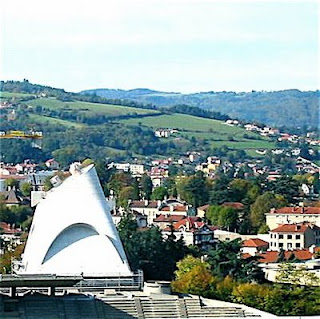
The recognition of the builders, working in a field close to the creation, he is, meanwhile, gained. This profession is at the pinnacle. Especially after that as an engineer-administrator, he provided a tremendous job with the help of workers of the company Gazelle, in implementation of the structural work of architectural monument, designed by Le Corbusier: the church of Saint-Pierre in Family in the Loire. This singular character, the beautiful white mane, I would describe as having the original heart of the hand, loving to share with others: friends, family, relationships, his join the vivace, his love of people and freedom. His mind hot, crowded with new ideas, sometimes utopian, strives to make a difference in the to make life pleasant for everyone. As both bohemian and rigorous, it appeals to all who approach. patriarch, not bossy at all, but still spirited and attractive, "the ancestor "fall for her five grandchildren. Especially before the last born, Nina, 1 year, daughter of Raoul who runs for public works (he is the son of his father) in all countries of the world (currently in Johannesburg in South Africa soon Reunion, and previously, China, Japan ....) For Nina, this grandfather outsized drawing figures that do not leave us indifferent and that could expose one of these days. In this family, writing stories, knit dolls, or draw for children, denotes, in all cases, a good dose of optimism, tenderness and hope. In fact, I do have not said? Artist in the soul which I have painted the picture very quickly, my brother, Aurelio Fernandez.


Monday, 1 August 2011
Abstract art, an invention of the 20th century
During the second decade of the twentieth century, a radical and decisive occurs in painting, the invention of abstraction.
Of course, since the dawn of time, non-figurative forms were used in decorative programs, such as decorating the Greek terracottas of antiquity, the baroque arabesques of wrought iron or curls of Art Nouveau. But these motives were subject to external purposes, such as the beautification of a place or object.
The approach that characterizes the masters of abstraction of the early 20th century is to propose, simply, an "image abstract. "
The oxymoron is that this phrase, an image is traditionally defined as a replica of reality, says the new company. The abstract paintings are images that refer to self nothing else but themselves. In this sense they are similar to the icons of the Orthodox faith who demonstrate the presence of content rather than they are, but, unlike these religious images, abstract paintings break with the world of appearances. They reveal the existence of previously unseen and unknown realities, as determined by each artist in his own way, in his own convictions, their background and culture, folk art to the most speculative theories. Each of the four pioneer artists of abstraction, Frantisek Kupka , Wassily Kandinsky , Kasimir Malevich and Piet Mondrian , resulting in his own language of abstraction, independently of the others.
However, they crossed the threshold of abstraction about at the same time, between 1911 and 1917, simultaneity can be explained by common concerns. They all had a spiritual practice or esoteric. They were also, for some, very attached to music, the least imitative of all arts, they have sometimes taken as a model. And, more generally, they worked in a cultural context, especially with the emergence of science of quantum physics and relativity theory, where the notion of reality becomes problematic. As noted by Paul Valéry at the time, "Neither the matter nor space nor time is twenty years since they were always". In this context culture and science of the early 20th century, the reality is less than what we perceive with the senses that an entity that is approached by thought experiments.
The inventors of abstraction propose a new form of painting in line with this worldview.
Of course, since the dawn of time, non-figurative forms were used in decorative programs, such as decorating the Greek terracottas of antiquity, the baroque arabesques of wrought iron or curls of Art Nouveau. But these motives were subject to external purposes, such as the beautification of a place or object.
The approach that characterizes the masters of abstraction of the early 20th century is to propose, simply, an "image abstract. "
The oxymoron is that this phrase, an image is traditionally defined as a replica of reality, says the new company. The abstract paintings are images that refer to self nothing else but themselves. In this sense they are similar to the icons of the Orthodox faith who demonstrate the presence of content rather than they are, but, unlike these religious images, abstract paintings break with the world of appearances. They reveal the existence of previously unseen and unknown realities, as determined by each artist in his own way, in his own convictions, their background and culture, folk art to the most speculative theories. Each of the four pioneer artists of abstraction, Frantisek Kupka , Wassily Kandinsky , Kasimir Malevich and Piet Mondrian , resulting in his own language of abstraction, independently of the others.
However, they crossed the threshold of abstraction about at the same time, between 1911 and 1917, simultaneity can be explained by common concerns. They all had a spiritual practice or esoteric. They were also, for some, very attached to music, the least imitative of all arts, they have sometimes taken as a model. And, more generally, they worked in a cultural context, especially with the emergence of science of quantum physics and relativity theory, where the notion of reality becomes problematic. As noted by Paul Valéry at the time, "Neither the matter nor space nor time is twenty years since they were always". In this context culture and science of the early 20th century, the reality is less than what we perceive with the senses that an entity that is approached by thought experiments.
The inventors of abstraction propose a new form of painting in line with this worldview.
Friday, 29 July 2011
Art- Fadi Karnaby
the artist is a learned, experienced valuation of the end of the period the church of the Middle Ages retrieves Greek motifs symbolic themes for Christians. Atlas is used to include God, the pattern remains the same but its meaning changes.
It is for the greater glory of God that the artists work, and nothing is too good to celebrate it. The colors explode in the pages of manuscripts (the admirable Apocalypse of Saint-Sever), on windows, or tissue, which often come from Byzantium or the Islamic world. The capitals and statues are painted. Gold, ivory and precious stones adorn the reliquaries, sacred vessels or the bindings of the Gospels.
"Do not look in the Romanesque style unit said Danielle Gaborit-Chopin. Each artist seems to find a new expression. Each offers different solutions, which can lead to a masterpiece as a dead end. "
Is it possible to distinguish "local schools" "It would be pointless to release any strength of regional styles, since, within the same geographical area, different styles co-exist, says Ms Gaborit. There individualization of regional centers, but we can not really talk about regional schools. "It is certain, however, that this emerging company, being completely remodeled, broke with the previous period, that of the Carolingians, obsessed with maintaining their links with the late Roman Empire.
REFINED AND ALMOST BARBARIAN
Artists novels - which are far from being anonymous as is the tradition - yet have some common features. They ignore the reality and remain indifferent to the proportions. The size of the characters (or parts of the body such as hands) is a reflection of their symbolic importance. Because they do not try to translate the tangible reality and ignore the abstraction, the artists draw their inspiration from natural forms which they interpret, purify, to coincide with their feelings of religious mystery. In addition, they work freely from elements "reported", Byzantine, Islamic and ancient, sometimes pushing up the art of collage, combining all the findings, without complex, with strong momentum.
It appears from the Louvre with the idea of an art at once refined and almost barbarous. Some parts, such as reliquaries who complete the course of the show, reminiscent of "idols" of Africa. We find the same rejection of realism, the same symbolism, the same hieratic, the same salience of the sacred. In the Romanesque period, Georges Duby wrote in The Age of Cathedrals (Gallimard), art has "no other function than to offer to God the riches of the visible world, that allow the man to such gifts to appease the wrath of the Almighty and to win his favor. All great art was then sacrifice. It is less aesthetic than the magic. " And he adds: "How Christianity, one thousand, prostrate in front of shrines, have dared to focus on what Christ was human? "
Finally, the Romanesque, says the historian, is a way of initiation. It is responsible for translating into simple shapes the harmonic structure of the world. It is a revealing: "Art is a discourse on God, as the liturgy and music. "That's why it proceeds by symbols. That the objects are monument, painting or piece of jewelry, carved or painted, all "present the world a gloss, a clarification." Their forms were not addressed to the crowds, insists Duby, but close elite. If the novel sometimes plays art pedagogy, "for education remained marginal in the artistic creations of that time: it is an aesthetic closed, inward-looking, made for the" pure men ". "
Ms. Gaborit unique challenges this bias. "While it is true that at that time, the art comes out of the whole Church, which is the only force grown, large ears of the religious buildings are real lessons given to the faithful. The lives of saints painted on the walls of shrines play the same role. There is a real education. Furthermore, reliquaries were out in processions, for the holidays, they run the emulation of the faithful. It is certain, however, that there are two levels of reading in Roman art: immediate access to the largest number, and a hidden message which is addressed to the elite. But this need to reach the faithful is more noticeable than the Gothic period, when art will emanate from the royal court. "
Emmanuel de Roux: Article published in World of 3/17/05 on "Romanesque art, or the flowering of a new world," March-June 2005 Louvre Museum
French art in the Gothic (Ernest Renan)
"The Gothic style thus appears as a purely French art. He was born with France, at the very center of French nationality in this country prosperous and rich that emerged the first Germanic fertility, was the cradle of the Capetian dynasty, and collected before any other benefits. It was, as stated by M. Viollet-le-Duc, the architecture of the royal domain. Mainly under the influence of French royalty and the Abbey of Saint-Denis, this country, in the eleventh and twelfth centuries was the scene of a great awakening of the human spirit, a kind of rebirth, which resulted in poetry by the epics, philosophy, the emergence of scholasticism, in politics by the movement of Commons and the administration of Suger in Saint Bernard and religion by the crusades. Gothic architecture, or rather, the movement of construction when it came out was the product of the same causes. As for municipalities, it was probably not a fortuitous circumstance that made their school to coincide with the architectural renovation. The church at that time, had inherited the forum and basilica old, was the venue of the meetings calendar, and, indeed, they are common to towns, Noyon, Laon, Soissons, raising the first cathedrals Gothic.
That nothing, neither Italian nor German, not to meddle in this first revival all French of the eleventh and twelfth centuries, so sadly stopped in the fourteenth, which is, for architecture, is a certainty. Hundred years at least the pointed style remains the exclusive property of France. The Rhine is still covered in Romanesque buildings, when the masterpieces of the Gothic style were already high in northern France. England was the Gothic churches built in the twelfth century, but by the French. In 1174, the rebuilding of Canterbury Cathedral has been decided, they opened a competition: it was William of Sens, famous for great work, which was chosen, and the choir began in the new system that already existed exclusively in France . In the thirteenth century, countless master masons who wore this style to the borders of Latin Europe were French. The first non-French Gothic architect whose name is known is Erwin of Steinbach (1277). In Germany, until the fourteenth century, this style is called "French style", Op francigenum, and that's the name he should have kept. Unfortunately fate which deprived France of the glory of his epics can be found here. The narrow mind which dominates from St. Louis, the violence of the Inquisition, the miseries of the Hundred Years War, put out in our engineering. Strasbourg and Cologne schools become the style that we had created. France sees in turn to her foreign artists. The French style is said to German Italy called Teutonic, then, by a misunderstanding of the most bizarre claim is absurd to designate the name of Gothic. Remember that the barbarians were mainly known in Italy by the Goths. Gotico became synonymous with Barbaro, and a legend represented the Goths as fantastic beings bent on the destruction of Roman monuments, they were hammered overnight. In their disdain for this architecture, which did not conform to Greek orders, and was deeply repugnant to them, the Italians of the sixteenth century called it gotica, and this name was more easily accepted by the seventeenth-century France , the word Gothic was taken into French, as a result of Italian influence, like a shade (Gothic script, the Gothic period, etc.).. From there to say that the Goths had invented this style, there was only one step: the Vasari crosses, and now this nonsense is not yet uprooted history of Italy.
How extraordinary that style was formed, which, for nearly four hundred years covered Latin Europe building footprints so deep originality? The learned and judicious research that I remembered just now solved the issue. The old assumptions, and an Eastern influence, and a Germanic origin, and a so-called type Xyloid (wooden architecture) must be totally abandoned. The Gothic style emerged from a novel by natural growth, or if we prefer, by the work of men of genius firing an inflexible logic consequences of the art of their time: it was the continuation of an earlier style, founded around 1000 and deducted himself of the laws that previously had chaired in the West for the construction of Christian temples. "
By- Fadi Karnaby
Tuesday, 26 July 2011
The art and spiritual life- Fadi karnaby
"Art is the organization of sensory impressions, which expresses the sensitivity of the artist and communicates to its audience a sense of values that can change their lives" . Using its own definition, Sangharakshita explores the relevance of art and the artist for personal and spiritual evolution of man.

The Buddha by Odilon Redon
by- Fadi Karnaby

The Buddha by Odilon Redon
Through art we mean all the arts. We take this term to cover painting, sculpture, poetry, music, architecture, etc.. And the spiritual life we mean the whole process of higher evolution. In this regard, I must admit that I am not very happy with the word 'spiritual'. When I was writing down the track list for these readings, I really hesitated before writing the word and spirit of art and spiritual life, because I know that for many people the word spiritual has a bad connotation. When we speak of spiritual life people begin to believe in spirits and spiritualism and turntables and voices from beyond and shapes and appearances. So I could not help but think it is better to avoid the word spiritual. Unfortunately, there is no one in everyday language equivalent term for the word spiritual. I thought perhaps we could begin to popularize the term 'meta-biological' I had already used. I know it's a bit long, meta-biological, but the month has the merit of covering all the higher manifestations of the human spirit, not only art but also religion and philosophy.
So when we talk about art and spiritual life, or art and higher evolution, we are not suggesting that these are really two separate things. Not that you have art on one side and the spiritual life of another. The art here and the spiritual life there, rather superficially united by that little word "and". Not that art and religion are in a superficial relationship. We can even say that art is included in the spiritual life, the arts are just one aspect or manifestation of the higher evolution as such. It does not mean, of course you can not live a spiritual life, can not participate in the higher evolution of humanity, without being an artist. It does not mean it, but it means we can not be an artist without participating in the same time to the spiritual life, the evolution later. To the extent that is an artist, a true artist, a genuine artist of any discipline, is involved in the higher evolution of man.
Now I'm sure this idea is not obvious to most people. They could see it as an unnecessary glorification of the artist, and even they may not agree at all. We know that people generally have little regard for art and the artist. In truth they do not see too much, not compared with other more important things, other activities that really matter. Many people have a tendency to have a contemptuous gaze on the arts and the artist and think that the artist deals with things rather trivial, not the "real man's job". In this context, I remember a little story, I think of the autobiography of Sir Osbert Sitwell, who is a long work in several volumes, very prolific, but contains some very good stories well told. Perhaps you know that Sitwell was one of those very, very bright family where almost everyone seems to be a genius and all your brothers, sisters, aunts, cousins, uncles etc.. are geniuses - it must be a wonderful way to grow. So you Osbert and Sacheverell and the famous Edith, all currently living together when they were young in this huge old dilapidated family home, one lives in a wing, the other in another wing, with one kilometer of corridors them with many servants. Then, as reported by Osbert Sitwell, one morning he wanted to communicate with her sister Edith in her wing to her. So it sounds to call a maid and gives her a little note, saying: Give the paper to my sister if she is not busy. But if she does something, do not give, do not disturb. Just come right back and tell me: when a quarter of an hour later, after crossing all lanes in both directions, the maid comes. Sir Osbert and ask him you gave him the message? "She said, oh yes. My sister was not doing anything? Oh no, she did nothing at all, she was just writing. So it 's is often the attitude when you are writing or painting, or if you do something of this sort, you do nothing really.
In light of this sort of common misconception on the theme of arts in general, so try to go a little deeper into this whole subject, and try to see how or in what sense the art is part of spiritual life, the higher evolution of man. And also how the artist is, in fact, the new man? Now it will require a consideration of the question of what is art? But we put it aside for now and we will observe the artist as a new man, the artist regarded as sharing the characteristics of the new man.
The new man is distinguished by five characteristics. Surely there are many more, but apparently they are more clearly recognizable. The characteristics are the awareness of self, true individuality, creativity, loneliness and unpopularity common. So take a break before returning to the question of what is art and look briefly at how we can apply the five characteristics of the new man to the artist, he is a poet, painter, sculptor or musician etc.by- Fadi Karnaby
Subscribe to:
Posts (Atom)